
The artificial intelligence landscape is shifting rapidly. We are moving away from simple generative AI tools like ChatGPT and entering the era of AI Agents. Unlike basic chatbots that just answer prompts, AI agents can think, plan, and execute multi-step tasks entirely on their own.
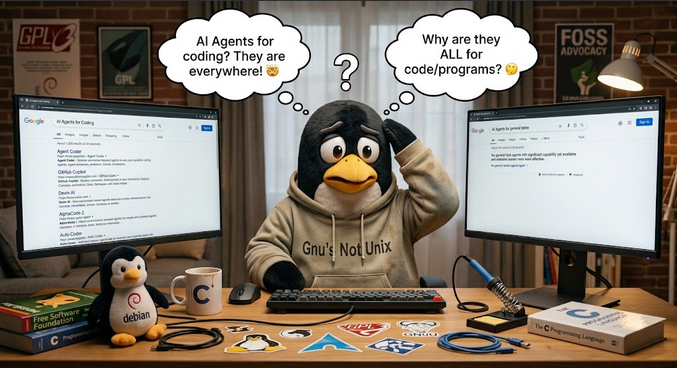
However, if you look at the current tech market, you will notice a fascinating trend: the most successful and talked-about AI agents—like Devin, Cursor, or GitHub Copilot Workspace—are almost exclusively built for coding.
Why is this happening? Why did the programming industry become the first to be “taken over” by autonomous AI agents, leaving fields like law, medicine, or finance behind? Here are the core reasons why coding is the perfect playground for AI.
- Code is Strictly Deterministic (Predictable)
Human languages are messy, full of nuances, sarcasm, and cultural context. Programming languages are the exact opposite. They are built on absolute logic. In coding, there is no gray area; a piece of code either works, or it doesn’t.
This deterministic nature is exactly what AI thrives on. The agent doesn’t need to guess human emotions or intentions; it only needs to follow rigid, standardized syntax rules that remain the same everywhere in the world.
- The Power of Instant Feedback Loops
For an AI agent to work autonomously, it must be able to learn from its own mistakes without human intervention. Programming provides the ultimate environment for this:
- When an AI agent writes a script and runs it, the system environment provides instant feedback (e.g., Error: Undefined variable on line 24).
- The agent can read this error log, analyze what went wrong, rewrite the code, and test it again.
This continuous loop of write-test-fail-fix happens in seconds. In fields like customer service or marketing, feedback loops take days or weeks.
- A Ready-Made Ecosystem of Automation
An AI agent needs digital “hands” to interact with the world. In software development, every single tool is already digitized and built for automation. An AI agent can easily connect to:
- Linters: To instantly check code quality and formatting.
- Compilers/Interpreters: To execute the code.
- Automated Testing Suites: To verify if the software behaves exactly as intended.
Because developers have spent decades building APIs and command-line tools to automate their own workflows, AI agents can step right into these existing environments and start working immediately.
Comparison: Why Other Industries Are Harder for AI Agents
To better understand why coding dominates the AI agent space, let’s compare software engineering with other high-skill industries:
| Critical Factor | Software Engineering (Coding) | Other Fields (Law / Medicine / Business) |
| Feedback Speed | Instant (seconds from compilers and test logs). | Delayed (weeks waiting for lab results, court rulings, or client feedback). |
| Risk of Mistakes | Low to Moderate (errors are caught in a sandbox before deployment). | High to Fatal (a wrong medical dose or legal clause can lead to lawsuits or loss of life). |
| Tolerance for Hallucination | Low, but easily filtered out by automated test runs. | Zero. AI cannot “make up” legal precedents or medical symptoms. |
The Big Picture
AI agents are not dominating the coding space because programmers are lazy. They dominate it because the software development environment is the ideal training ground for autonomous AI. It offers clear rules, immediate feedback, and safe, isolated testing environments.
However, what we are seeing right now is just the stepping stone. The self-correcting mechanisms that AI agents are mastering through code today will eventually be adapted to solve complex, unpredictable problems in the physical world tomorrow.